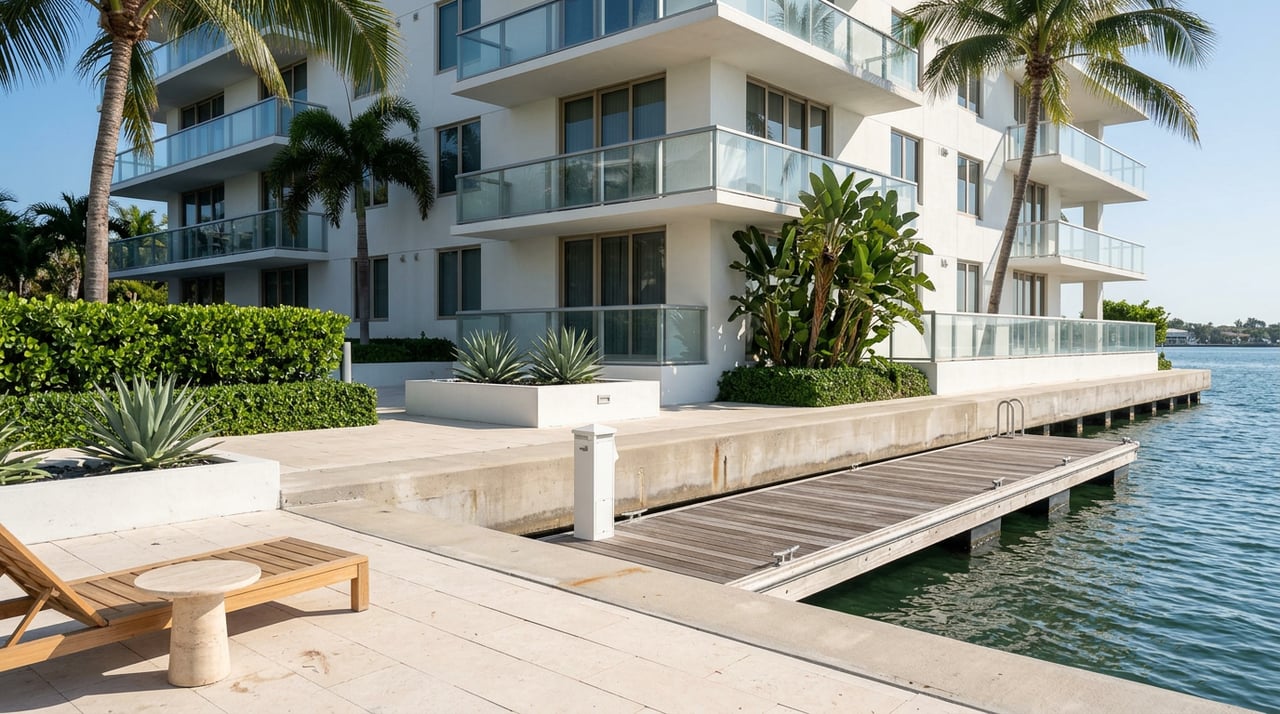
Buying an Intracoastal Condo in Delray Beach
March 5, 2026
March 5, 2026
What if the best part of your Delray Beach home was the water right outside your window? Buying an Intracoastal-front condo in 33483 can deliver that everyday luxury, but the details matter. Docks, seawalls, flood maps, insurance, and building inspections can make or break your experience and your budget. This guide gives you a clear, step-by-step path to shop smart, compare buildings, and protect your investment. Let’s dive in.
In Delray Beach, an Intracoastal-front condo usually sits on a canal, basin, or the Atlantic Intracoastal Waterway. Some communities include marina facilities, while others offer a view only. The biggest difference is slip rights. Units may have a deeded slip, an assigned/managed slip through the HOA, or no slip at all. That choice controls usage rights, waitlists, and long-term value, so verify how slips are owned and managed before you write an offer. You can use marine references to understand typical arrangements in South Florida marinas and communities, as summarized by regional marina guides.
Water views are part of the premium you pay. In Delray, future development and design rules can affect sightlines and building massing on the waterfront. If uninterrupted views are a must, review current zoning and any riverfront or view-corridor guidance for the parcel and its neighbors. You can explore local planning context through zoning and design code references, then confirm details with the city.
Seawalls and docks are critical infrastructure. In Florida, shoreline work often needs state authorization and sometimes federal approval, along with local permits. Before you commit, ask for the permit history, any engineering reports, invoices for recent repairs, and clarity on who owns and maintains the seawall. The Florida Department of Environmental Protection explains coastal permitting programs and when approvals are required.
Delray Beach has identified many waterfront parcels that need seawall improvements, and the city maintains standards for elevation and condition. Reviewing city guidance helps you budget for potential capital work and assess compliance risks. Start with the city’s stormwater and flooding resource page to understand local resilience efforts and seawall expectations.
If boating is part of your plan, do not assume “deep water.” Verify the route from your slip to your preferred inlet. Ask for the controlling depth at mean lower low water, the date of the most recent soundings, and the list of bridges with closed and open clearances. A marine surveyor can measure depths at low tide and flag shoaling issues. Use NOAA Tides & Currents for tide predictions and datum so you can compare apples to apples.
Waterfront living comes with flood considerations. Pull the exact address in FEMA’s Flood Map Service Center to confirm the flood zone and Base Flood Elevation. Lenders follow these maps when they set flood insurance requirements, and many waterfront buildings fall in higher-risk zones. Start early by requesting the building’s elevation certificate and shopping insurance quotes for both the association’s master policy and your HO-6 policy. The FEMA Flood Map Service Center is your source for official flood data.
Insurance availability and pricing can change with market conditions. If private carriers are limited, you may need to consider Citizens for wind coverage or other options. Review market context with Citizens Property Insurance, then build realistic carrying-cost models that include HOA dues, flood premiums, and reserves.
Palm Beach County and local cities are investing in resilience planning. These projects inform seawall standards, drainage improvements, and long-range infrastructure. When you compare buildings and neighborhoods, factor in how the area is planning for tidal flooding and storm surge over time. You can review county-level projections and action plans in the Palm Beach County resilience portal.
Florida requires periodic milestone inspections for condominium buildings that are three stories or more. The initial inspection occurs at 30 years, or 25 years in coastal areas where set earlier, then every 10 years. Ask whether the building has completed its milestone inspection, if any phase-two testing was required, and whether repairs are permitted and underway. This is a material risk and a negotiation lever. See the state’s milestone statute for details in FS 553.899.
Your best window into a building’s health is the association’s records. Florida’s Condominium Act governs disclosures, estoppel letters, reserves, insurance, and assessments. When you are serious about a unit, request the declaration, bylaws, rules, current budget, most recent financials, any reserve or structural integrity reserve study, meeting minutes, insurance declarations, and an estoppel/resale certificate. You can review the statutory framework in Florida Chapter 718, including FS 718.503 on pre-sale disclosures and FS 718.116 on estoppel certificates and assessments.
Key red flags include underfunded reserves, frequent or large special assessments, and pending litigation. These issues often translate to higher monthly costs or near-term capital calls.
Use this working order to evaluate any Intracoastal condo in 33483:
You deserve a waterfront home that elevates your lifestyle without surprise costs. Our team brings white-glove buyer representation with deep condo and waterfront expertise across Delray Beach and Boca Raton. We coordinate inspections, connect you with trusted marine and building professionals, and model true carrying costs so you can decide with clarity.
If you are weighing two units with different slip rights or seawall conditions, we help you quantify the tradeoffs and negotiate accordingly. If a milestone report shows upcoming work, we work with you to secure credits, escrows, or alternative options before you remove contingencies. Ready to make a confident waterfront move? Partner with Hall Luxury Homes Group and let us guide every step.

Broker-Associate® | MBA, ABR®, CLHMS™, PSA, RENE, RSPS, SRS
David Hall is a South Florida luxury real estate advisor and the founder of Hall Luxury Homes Group. As a Broker-Associate®, David specializes in luxury homes, waterfront properties, and residential real estate throughout Boca Raton, Highland Beach, Delray Beach, and nearby communities. With extensive experience in the local market, he shares insights on luxury real estate trends, buying strategies, selling tips, and property investments. He provides expert guidance to homeowners, buyers, and investors looking to make informed real estate decisions in South Florida.
Our commitment, experience, loyalty and dedication are paramount to our success, and the only way we conduct business. Together, we’re tirelessly passionate about getting the best results for buyers and sellers, while offering first-class professional concierge service through every step of the process.
HALL LUXURY HOMES GROUP
David Hall
(561) 508-1310
[email protected]
Sonia Hall
(516) 526-1090
[email protected]
101 N Federal Hwy Ste 501 Boca Raton FL 33432