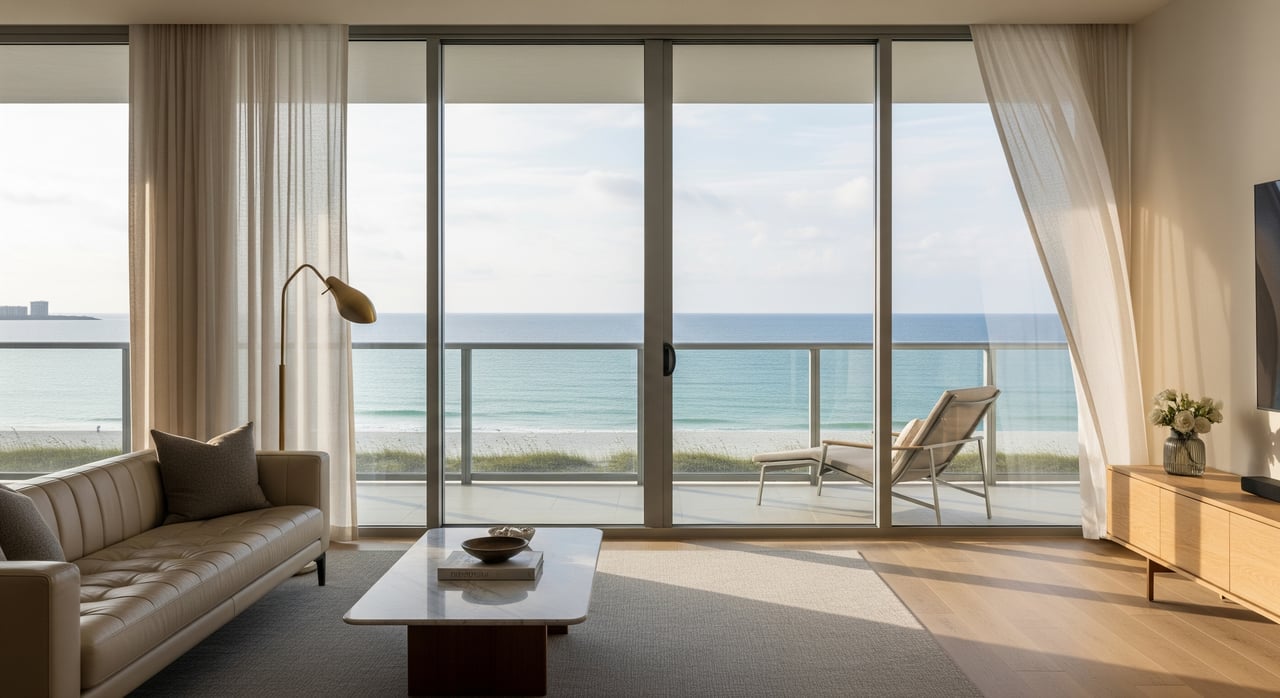
Should you pick a sky-high ocean view or the easy access of a lower floor? In Highland Beach, the floor you choose changes your daily routine, exposure to storms, and even your long-term costs. If you are weighing views against convenience, or wind against water, you are not alone.
This guide breaks down how high-floor and low-floor condos compare in Highland Beach, with simple tips on risk, insurance, resale value, and due diligence. You will leave with a clear checklist and the confidence to choose the right fit for your lifestyle. Let’s dive in.
Highland Beach context
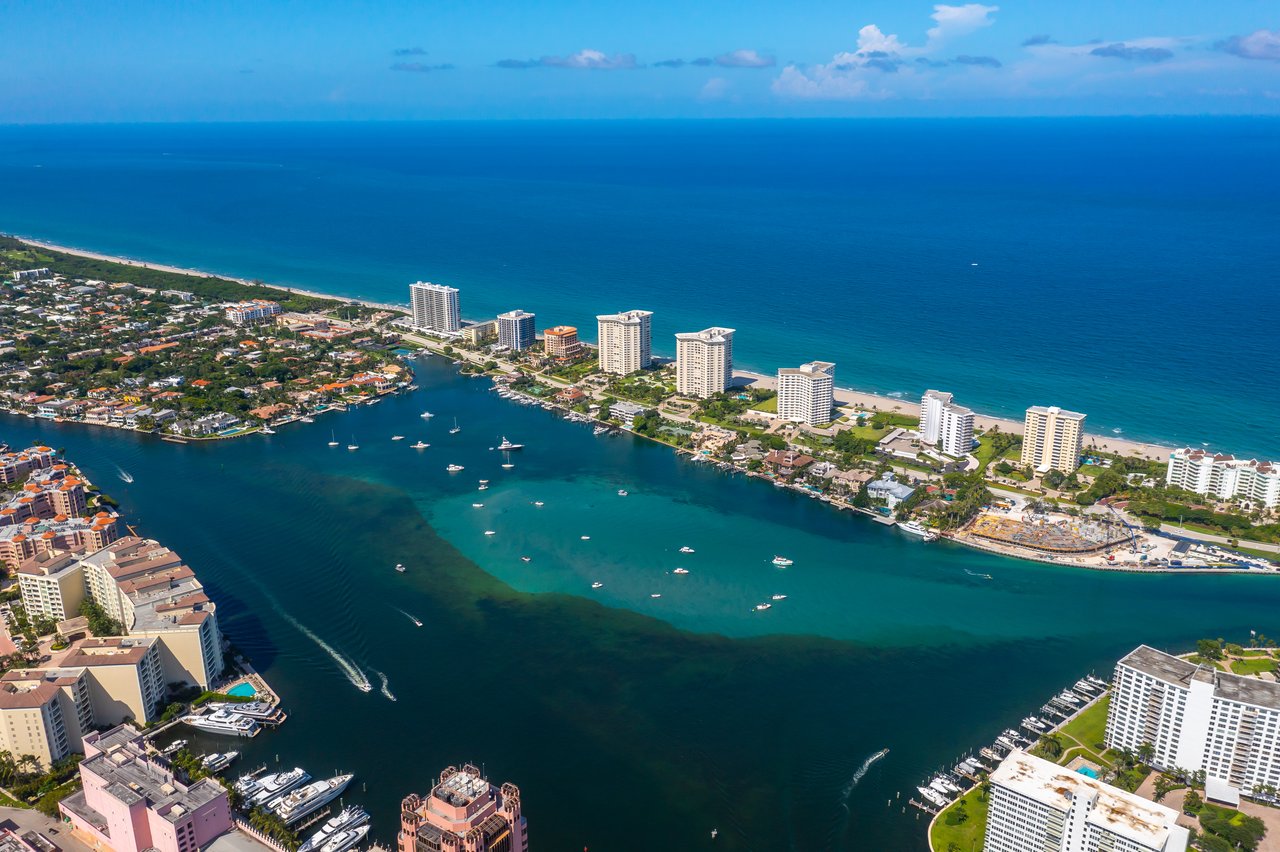
Highland Beach sits on a narrow barrier island between the Atlantic Ocean and the Intracoastal Waterway. Many buildings are oceanfront or intracoastal, and floor level can change your view and storm exposure.
Buyers often include retirees, seasonal owners, and investors. Some prize unobstructed ocean views and privacy on higher floors. Others prefer quick beach access, shorter elevator rides, and ground-level convenience.
Coastal conditions shape decisions here. You should consider wind, storm surge, flood zones, and salt air. Building age, construction standards, and association rules also matter.
Quick comparison: high vs low floors
- High floors: stronger ocean views and light, higher privacy, less street noise, more wind exposure, full dependence on elevators, and often a price premium.
- Low floors: easier access to beach, parking, and amenities, potential for larger patios, more street and pool noise, higher flood exposure, and sometimes lower pricing unless patio or access features are rare.
Views and privacy
High floors
- Unobstructed ocean and horizon views are common, especially on upper levels and penthouses.
- More natural light and a stronger sense of privacy from street and pool areas.
- These features can create a prestige factor that supports resale demand.
Low floors
- Quicker access to outdoor spaces and amenities can become your daily routine.
- Garden or pool views appeal if you prefer shade or watch community activity.
- Some ground-level patios offer a unique indoor-outdoor lifestyle that certain buyers prefer.
Price and resale
High floors
- Upper floors with full ocean views often sell at a premium within the same building.
- The size of the premium depends on view quality, the building, and demand.
Low floors
- Pricing is often lower than similar higher-floor units, but there are exceptions.
- Units with large patios or direct access to sand or amenities can command strong prices.
- Resale demand varies by buyer segment. Some seasonal buyers chase views, while others value convenience.
Noise and daily convenience
High floors
- Less exposure to street and pool noise. You may still hear wind or rooftop equipment on top floors.
- Longer elevator waits can add up during peak times.
Low floors
- Faster entries and exits for groceries, pets, deliveries, and beach gear.
- More exposure to street, driveway, and amenity activity. Patios may have less privacy if near foot traffic.
Hurricanes and flooding
High floors
- Greater wind exposure and potential for wind-driven rain at elevation.
- Buildings are designed to code, but older buildings may have windows and doors that are not impact rated.
- Elevators are often shut down during storms. If generators do not power elevators, upper-floor access can be limited during outages.
Low floors
- Higher exposure to storm surge and coastal flooding. The lowest levels face the greatest risk of water intrusion.
- Sand and debris can enter ground-level areas during severe events.
Insurance and HOA finances
Flood and master policy basics
- In a condo, the association typically carries a master policy for the building shell. You carry an HO-6 policy for walls-in and contents.
- Flood coverage depends on the association’s policy and the building’s flood zone. Units above the lowest level face less direct flood risk, but premiums and coverage are set at the building and policy level.
- Flood zones and Base Flood Elevation influence coverage needs and cost. Check FEMA flood maps and the building’s elevation data through association documents.
Wind and hurricane deductibles
- Wind and hurricane deductibles in Florida are often a percentage of policy limits. Large deductibles can lead to special assessments after a claim.
- Ask for the association’s deductible, claims history, and reserve strength. These factors affect your risk of post-storm assessments.
Maintenance and long-term wear
High floors
- Salt-laden air can speed up corrosion on exposed metal, including balcony railings and hardware.
- Rooftop mechanical noise and service access can be more noticeable on top floors.
Low floors
- Ground-level moisture, irrigation overspray, and garage or driveway exhaust can affect finishes and HVAC intake areas.
Security and safety
High floors
- Less risk of casual street-level access. Fire safety and egress plans matter more given longer exit routes if elevators are unavailable.
Low floors
- Easier egress on foot. Ground-level patios and doors should be secured to limit unauthorized access.
Local risk and regulatory checks
- Flood zone and Base Flood Elevation: confirm the parcel’s FEMA flood zone and any recent mapping updates. Oceanfront buildings may fall into higher risk zones.
- Building age and retrofits: newer construction follows updated Florida Building Code. Check whether windows are impact rated, balconies updated, and mechanicals elevated.
- Elevators and generators: verify if the generator powers elevators and for how long. Ask for outage history and maintenance records.
- Sea-level rise: review planning resources and any association steps to reduce future flood and surge impacts.
Due diligence checklist
From the seller or listing agent
- Exact floor, building stack, and orientation. Note any view obstructions or nearby projects.
- History of water intrusion, mold, or storm-related repairs in the unit.
- HVAC location and age, including condensers on balconies or roof.
- Balcony condition and repair history, especially top and ground levels.
- Any ongoing or past association litigation.
From the HOA or management
- Master insurance policy, including flood coverage, wind/hurricane deductible percentage, and what is covered walls-in.
- Reserve study and most recent audited financials.
- Meeting minutes for the past 12 to 24 months for special assessments, elevator outages, or claims.
- Generator coverage: which systems are powered, elevator coverage, run-time, and maintenance schedule.
- FEMA flood zone and building elevation data.
- Rental rules and any floor-specific limits.
- Elevator maintenance and service records.
Inspection and valuation
- Hire a general condo and building-level inspection to assess the envelope, balconies, and water intrusion points.
- For oceanfront buildings, consider a structural or facade assessment, especially if older.
- Compare like-for-like comps within the same building and stack, adjusting for floor and view.
- Ask the title or closing team about prior storm claims and related assessments.
Practical lifestyle checks
- Time elevator waits during peak hours.
- Visit morning and evening to gauge sunlight, shadows, and ambient noise.
- Review building rules that may affect lower floors, such as service or event access near the pool deck.
How to choose your best fit
- If you want panoramic ocean views and maximum privacy, focus on higher floors with clean sightlines. Verify window and door ratings and generator elevator coverage.
- If you value quick access, pets, beach gear, or frequent errands, a lower floor can make everyday life easier. Confirm flood zone, elevation, and patio drainage.
- If you have mobility concerns or expect frequent guests, weigh elevator dependence on higher floors against the ease of lower floors.
- If you are investing, check how your building’s renters respond to views versus convenience and confirm rental rules.
Pricing and marketing tips for sellers
- Use same-building comps by stack and orientation. Floor level and view lines often move value more than square footage alone.
- Quantify any high-floor view premium with recent sales. Highlight sightlines and privacy.
- For lower floors, market patio size, shade, and direct access to amenities if allowed by the building rules.
- Prepare documents upfront. Strong financials, clear insurance details, and recent upgrades build buyer confidence and can support premium pricing.
Choosing between a high floor and a low floor in Highland Beach is about trade-offs: view versus access, wind versus water, and privacy versus activity. With the right due diligence, you can align the floor level with your lifestyle and protect your investment for the long term.
If you want a bespoke plan for your building and stack, reach out to the white-glove advisors at Hall Luxury Homes Group. We will help you compare comps, evaluate HOA and insurance details, and secure the right unit with confidence.
FAQs
Do higher floors in Highland Beach condos cost more?
- Often yes within the same building, especially for unobstructed ocean views, but premiums vary by view quality, building, and demand.
Are low-floor condos riskier for flooding in Highland Beach?
- Ground and lower levels face higher exposure to storm surge and coastal flooding; check FEMA flood zone, building elevation, and the association’s flood policy.
Will a generator keep elevators running after a storm?
- Not always. Ask the HOA if the generator powers elevators, which elevators are covered, and how long they can run during outages.
Do I still need flood insurance on a high-floor unit?
- You may. Coverage depends on the association’s policy, building flood zone, and NFIP rules. High floors face less direct flood risk but can still be affected by building-level claims.
What documents should I review before buying?
- Request the master insurance policy, wind/hurricane deductible, reserve study, recent financials, meeting minutes, elevator records, flood zone data, and any litigation history.