
In Highland Beach, a Condo Can Pass Every Inspection and Still Fail the Mortgage Test
September 24, 2026
September 24, 2026
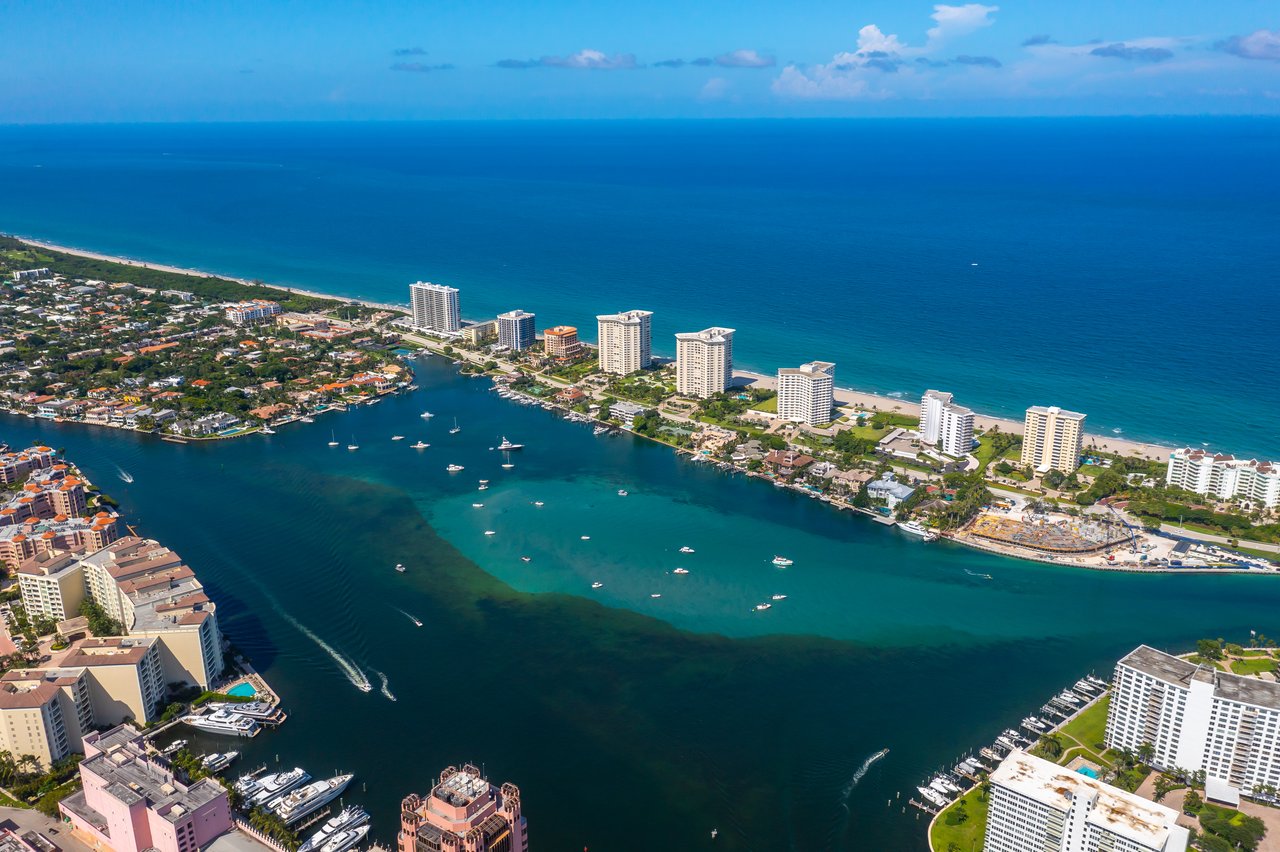
Walk the stretch of South Ocean Boulevard between the Intracoastal and the Atlantic and you pass through five decades of Highland Beach construction in about a mile. Penthouse Highlands went up in 1969. Monterey House followed in 1970. Regency Highland's fifteen-story tower opened in 1976. Coronado's twin towers were finished between 1982 and 1984. Toscana's three buildings didn't arrive until the early 2000s. Every one of them has weathered hurricanes, salt air, and at least one round of Florida's post-Surfside inspection law. Some have already cleared a milestone inspection and a Structural Integrity Reserve Study with no findings that would alarm a buyer.
None of that settles whether a lender will actually finance a unit inside them.
Since March 2026, Fannie Mae and Freddie Mac have been tightening a separate set of rules that has nothing to do with concrete, rebar, or balcony railings. It governs whether a condo association's books, insurance, and reserve funding meet the bar for a conventional mortgage. A building can be structurally sound and still land on the wrong side of that line, and the line has moved twice already this year with one more shift due in January.
Florida's milestone inspection and reserve study requirements ask a structural question: is this building safe, and is the association saving enough to keep it that way. That framework came out of Senate Bill 4-D, passed after the 2021 Champlain Towers South collapse in Surfside, and it applies to every residential condominium three stories or taller. Buildings that crossed the 30-year mark, or 25 years for coastal properties, were required to complete their first milestone inspection, and associations existing before July 2022 had to complete a Structural Integrity Reserve Study by the end of 2025.
Fannie Mae and Freddie Mac ask a different question entirely: is this association's financial picture strong enough that a mortgage on one of its units is a safe bet for the government-sponsored enterprises that ultimately buy most conventional loans in this country. That's the warrantability test, and on March 18, 2026, both agencies issued coordinated updates, Fannie Mae's Lender Letter LL-2026-03 and a matching Freddie Mac bulletin, that raised the bar considerably.
A building can satisfy the first test completely and still fail the second.
Three provisions from the March 2026 update matter most for anyone buying or selling in an older Highland Beach building right now.
| Change | Effective Date | Status as of September 2026 |
|---|---|---|
| Limited Review eliminated for projects over 10 units | Loan applications dated on or after August 3, 2026 | Already in effect |
| Per-unit insurance deductible capped at $50,000 | Loan applications dated on or after July 1, 2026 | Already in effect |
| Reserve funding minimum rises from 10% to 15% of assessment income | Loan applications dated on or after January 4, 2027 | Coming, not yet required |
Two of the three are already shaping every conventional loan application written on a Highland Beach condo today. The Limited Review pathway, a streamlined process lenders had relied on for more than twenty years to approve established, low-risk buildings without a full financial deep dive, no longer exists for any project with more than ten units. Every building in Highland Beach with more than a handful of homes, which is nearly all of them, now requires a Full Review: complete budget documentation, insurance declarations, board meeting minutes, litigation history, and reserve study conclusions, on every loan.
The insurance deductible cap is just as immediate. If an association's master policy carries a per-unit deductible above $50,000, the entire project becomes non-warrantable, and any unit owner in that building will need a personal HO-6 policy that explicitly covers the gap before a lender will sign off.
The reserve floor is the one still ahead of us. Starting with loan applications dated January 4, 2027, associations must budget at least 15% of their annual assessment income toward reserves, up from the 10% floor lenders have used for years. Boards writing their 2027 budgets this fall are already working against that number.
The reserve math is where age starts to matter. The 15% test isn't calculated against total expenses or the operating budget. It's the annual reserve allocation divided by annual budgeted assessment income, meaning regular common-expense fees. Buildings that historically ran lean on reserves, often budgeting somewhere in the 5% to 8% range, a common pattern in older Florida associations before the reserve law tightened, now have real ground to make up before their loan applications clear review.
There's a nuance here worth getting right. A completed Structural Integrity Reserve Study can serve as an association's proof of adequate reserve funding under the new lender rules, but only if the association is funding at the highest recommended level the study identifies, not the bare minimum needed to satisfy the state. The baseline funding method, long an accepted way to keep balances above zero without fully funding for replacement costs, is no longer an acceptable substitute under the March 2026 update. A building that completed its SIRS and is technically compliant with Florida law can still fail the federal reserve test if the board adopted a lower funding path than the engineer's top recommendation.
Insurance follows a similar pattern. Older coastal towers, particularly those built before the 1990s along a barrier island where windstorm and flood exposure are already priced aggressively, are more likely to carry higher per-unit deductibles as carriers manage their own risk. That makes the $50,000 cap a live concern for buildings like Monterey House and Penthouse Highlands in a way it simply isn't for a tower finished in the last twenty years.
The detail that surprises most people is that warrantability isn't a permanent status a building earns once and keeps. It's assessed at the time of each new loan application. A building that was approved for a buyer's financing six months ago can be flagged as non-warrantable for the next buyer if reserves have slipped, a delinquency rate has climbed, or new litigation has been filed in the meantime.
That means a seller's outcome can hinge on something that happened at a board meeting they weren't paying close attention to. It also means the building's financing status isn't really about any single unit. If the association as a whole fails the reserve or insurance test, every owner trying to sell or refinance feels it, not just the buyer whose loan application triggered the review.
When a building loses warrantable status, conventional financing disappears entirely for units inside it. Buyers are left with portfolio loans held in-house by a bank, non-QM products, or cash. Portfolio and non-QM financing typically requires 20% to 30% down and carries meaningfully higher rates than a conventional loan, and not every lender offers it for every property type.
For a seller, that shift shrinks the pool of people who can actually close on their unit. Fewer qualified buyers usually means more time on market and more pressure on price, even when the unit itself shows beautifully and the building's structural paperwork is clean. Even a cash buyer isn't entirely insulated from this. Resale value five or ten years from now depends on whether the next buyer in line can get a mortgage, and a building drifting toward non-warrantable status today is a building that may be harder to sell at full value later.
Before a contract is signed on an older Highland Beach condo, either side of the table should be asking for specifics, not assurances.
Does a passed milestone inspection mean my building is mortgage-warrantable? Not automatically. The milestone inspection and SIRS satisfy Florida's structural safety law. Warrantability is a separate federal lending standard covering reserve funding, insurance, delinquency, and ownership concentration. A building can pass one and fail the other.
Can I still buy a non-warrantable condo? Yes, through a portfolio loan, a non-QM product, or a cash purchase. Expect a larger down payment and a higher rate than conventional financing offers, and confirm your lender actually has a non-warrantable program before writing an offer contingent on financing.
If I'm paying cash, does any of this matter to me? It matters for resale. A building's warrantable status shapes how many future buyers can finance a purchase from you, which affects both your eventual sale price and how quickly the unit moves when you're ready to list.
Building-level financial paperwork has become as material to a Highland Beach condo purchase as the view from the balcony. Reading a reserve study or a master insurance policy correctly, and knowing which questions actually predict a smooth closing, is exactly the kind of work Hall Luxury Homes does before a client ever writes an offer or signs a listing agreement. If you're weighing a purchase or sale in one of Highland Beach's established towers, request a Concierge Consultation and we'll walk the building's numbers with you before you're under contract.

Broker-Associate® | MBA, ABR®, CLHMS™, PSA, RENE, RSPS, SRS
David Hall is a South Florida luxury real estate advisor and the founder of Hall Luxury Homes Group. As a Broker-Associate®, David specializes in luxury homes, waterfront properties, and residential real estate throughout Boca Raton, Highland Beach, Delray Beach, and nearby communities. With extensive experience in the local market, he shares insights on luxury real estate trends, buying strategies, selling tips, and property investments. He provides expert guidance to homeowners, buyers, and investors looking to make informed real estate decisions in South Florida.
Our commitment, experience, loyalty and dedication are paramount to our success, and the only way we conduct business. Together, we’re tirelessly passionate about getting the best results for buyers and sellers, while offering first-class professional concierge service through every step of the process.
HALL LUXURY HOMES GROUP
David Hall
(561) 508-1310
[email protected]
Sonia Hall
(516) 526-1090
[email protected]
101 N Federal Hwy Ste 501 Boca Raton FL 33432